How to import spices from India: a first-order checklist for bulk buyers
By Sahibzada Yamin Yaqoob, Export desk, Prime Harvest GlobalPublished
India grows 75 of the 109 spices listed by the International Organization for Standardization, and it ships them almost everywhere. Finding a supplier is the easy part. The hard part, for a buyer placing a first order, is that two suppliers can quote the same spice at very different prices, and the reason often only shows up once the container is sitting at your port.
We have exported spices from New Delhi for 25 years, to importers, distributors, food manufacturers and private-label brands in more than 50 countries. What follows is the checklist we take new buyers through, and you can use it with any supplier.
Start with the destination, not the price
A spice price from India means very little until the supplier knows where the lot is going. Black pepper headed for the USA is checked for Salmonella; the same pepper headed for Germany is checked for ethylene oxide. Japan applies 0.01 mg/kg to any residue that has no limit of its own. A lot that clears one border can be held at another. We go through each test, spice by spice, in why Indian spice shipments get rejected.
So before you ask anyone for a price, have these five things ready:
| What to send | Example | Why it matters |
|---|---|---|
| Spice and grade | Teja S17 chilli, turmeric at a set curcumin level | Grades differ a lot in price and use |
| Quantity | 0.5 MT trial, or a full container | Decides packing and freight |
| Destination port | Hamburg, Jebel Ali, Long Beach | Decides the border checks and the papers |
| Your QA limits | Aflatoxin, ethylene oxide, lead, Salmonella | These go into the contract |
| Incoterm | FOB, CIF or EXW | Decides who pays freight and insurance |
If your quality team has not set limits yet, our free spec checker shows what your border checks for each spice, the limit it sets and the documents it expects. A few minutes there makes the first call with any supplier much shorter.
Know what you are grading on
Each spice is bought on one or two numbers, and a good quote names them. "Premium quality" on its own is not a spec, so ask what the figure is.
| Spice | Graded on | Typical Indian range |
|---|---|---|
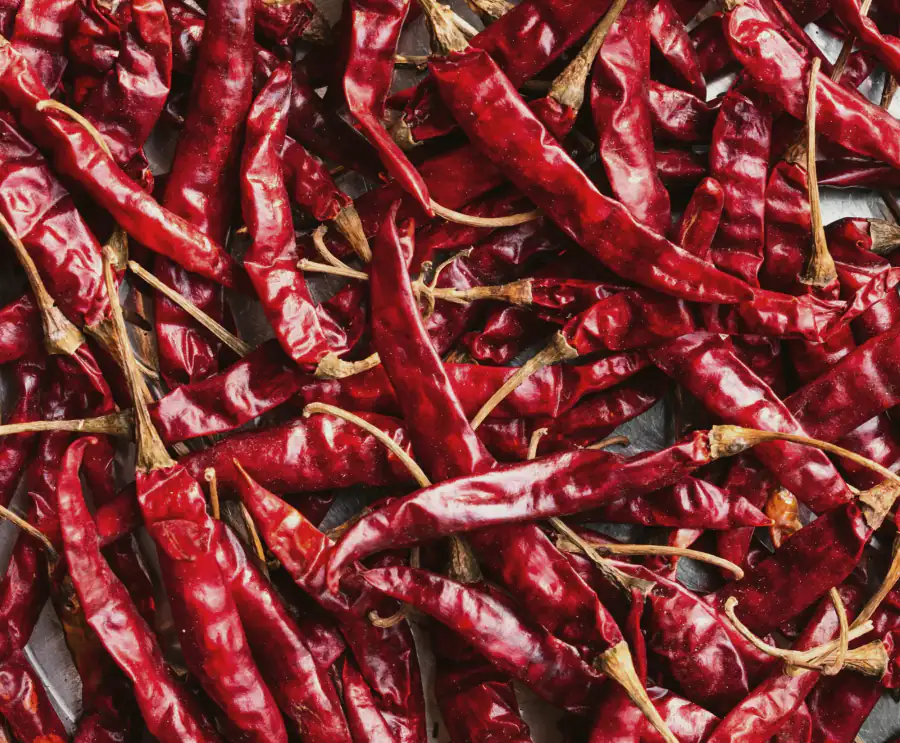
| Chillies | Heat (SHU) and colour (ASTA) | Byadgi 8,000 to 16,000 SHU; Teja S17 up to 100,000 SHU |
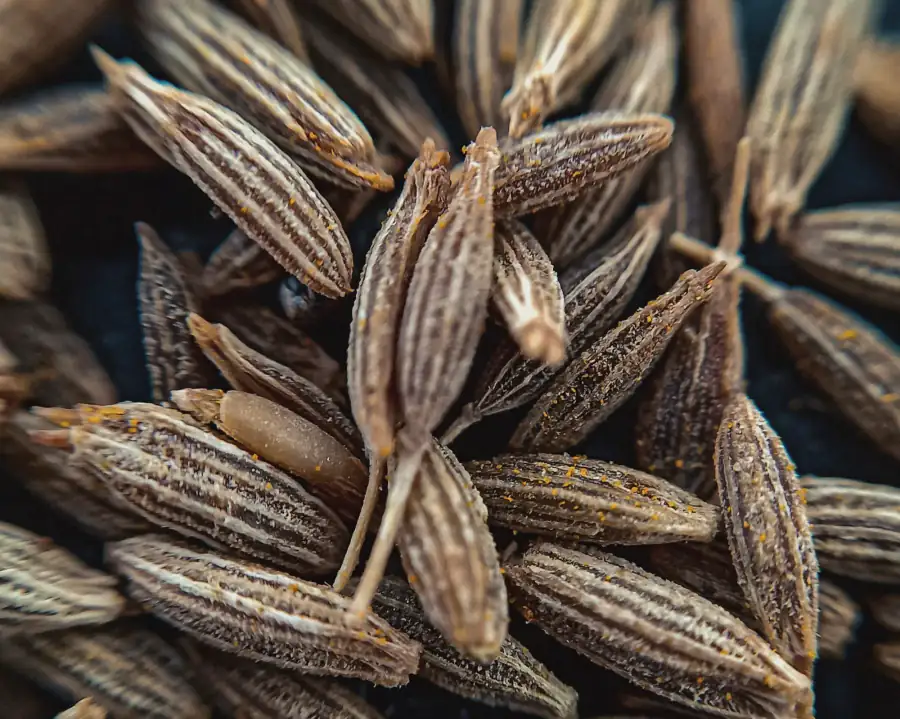
| Cumin | Volatile oil | About 2.5 to 4.5% |
| Turmeric | Curcumin | About 2.0 to 5.0%; high-curcumin lines 6 to 9% |
| Cardamom | Volatile oil | Small about 3 to 8%; large about 2 to 4% |
| Black pepper | Piperine and bulk density | 2 to 6%; 500 to 600+ g/l |
| Ginger | Volatile oil and oleoresin | Oil 1.5 to 3.0%; oleoresin 4 to 9% |
| Seed spices | Purity and volatile oil | Varies by seed; quoted per lot |
The figure for your actual lot should be printed on its certificate of analysis (CoA). Chilli grades differ enough to need their own guide, so we wrote one: Guntur vs Byadgi chilli grades explained. For cumin, origin matters as much as grade, and we compare the main origins in Indian vs Turkish and Iranian cumin. Our product pages list the grades and typical ranges for all seven lines we ship.
Ask whether the supplier grows or trades
Many spice suppliers in India buy from traders and open markets, then resell. There is nothing illegal about it, but it means the supplier often cannot tell you where a lot was grown, how it was dried or how long it sat in storage. Those are the things that cause aflatoxin and Salmonella.
Ask directly: who grows the spice, and who cleans and packs it? At Prime Harvest Global, farmers grow for us on contract in the regions best known for each spice (chilli in Guntur and Byadgi, turmeric in Salem and Erode, seed spices in Rajasthan, cardamom and black pepper in Kerala), and we clean, grade and pack in our own units. That is also why there is no trader margin in our price.
The order, step by step
This is how a first order runs with us. Most serious exporters follow something similar, and if yours skips a step, ask why.
1. Enquiry
You send the spice, grade, quantity and port, plus any limits your quality team uses.
2. Written quote
We reply with a quote in US dollars on FOB, CIF or EXW. It includes the limits for your country and the payment terms, in writing, before you sign anything.
3. Sample with its test report
We send a sample along with the test report for the lot it came from. You pay the courier. Most buyers approve a sample in about 5 days. A sample without a CoA tells you how the spice looks and smells, and nothing about residues.
4. Contract with named limits
The contract sets the limit for each test and lists every document the shipment will carry. The limit should come from your country's current standard, not from a general spec sheet, because some ports are stricter than others.
5. Lot testing before packing
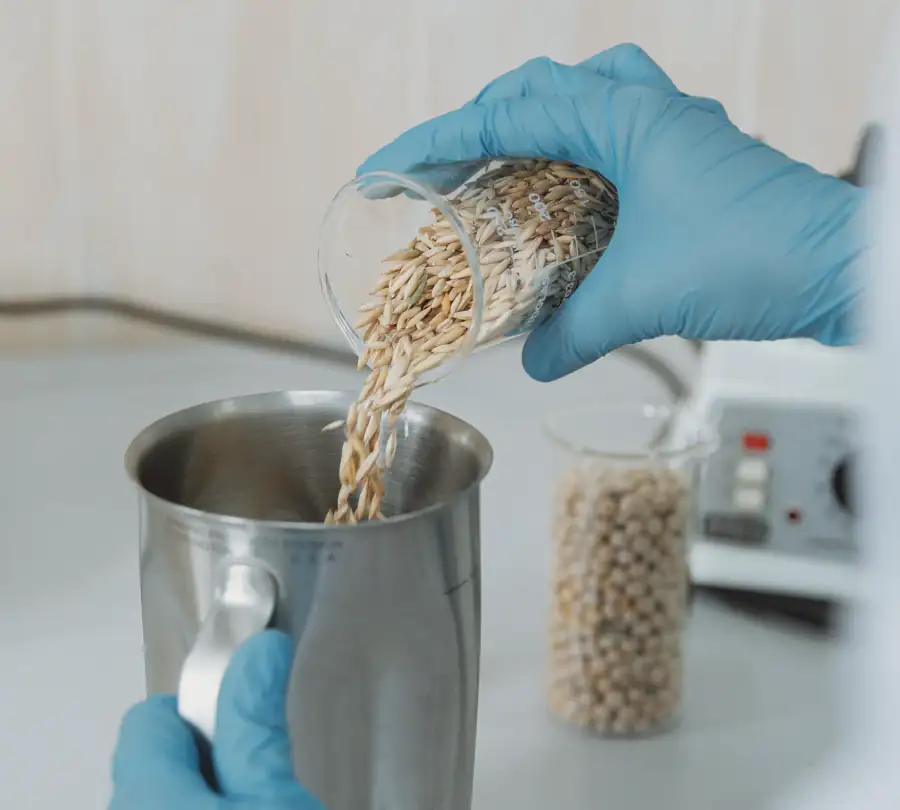
Your lot is tested at a third-party lab accredited by NABL to ISO/IEC 17025, against the limits in the contract, before it is packed. Testing after packing, or testing only the sample, is where surprises come from.
6. Documents and loading
We prepare the documents and load your container about 15 days after you order. You can read the full process on our site.
Two checks on the supplier's paperwork
Every spice exporter in India needs a Certificate of Registration as Exporter of Spices (CRES) from the Spices Board of India. Ask for the number before you pay a deposit. A supplier without one cannot legally export spices.
Your customs broker will also ask for HS codes. These are the four-digit headings for the main spices; your broker confirms the full code for your country.
| HS heading | Covers |
|---|---|
| 0904 | Black pepper, and dried or ground chillies |
| 0908 | Nutmeg, mace and cardamom |
| 0909 | Seeds of anise, fennel, coriander, cumin and caraway |
| 0910 | Ginger, turmeric, saffron and other spices |
The documents that travel with the container
Every spice shipment from India should carry these:
- Phytosanitary certificate
- Certificate of origin
- Certificate of analysis for the lot
- Commercial invoice and packing list
- Bill of lading
- FSSAI licence
- Importer Exporter Code (IEC)
- The exporter's Spices Board registration (CRES)
Each spice adds its own certificates. Chillies ship with an aflatoxin certificate and a Sudan dye I to IV test certificate. Cumin ships with ethylene oxide and Salmonella certificates. Turmeric ships with a lead and heavy-metal certificate.
Each market adds its own too. For the EU, your side pre-notifies listed spices on a CHED-D in TRACES NT, and spices listed in Annex II of Regulation (EU) 2019/1793 also need an official certificate and lab results. GCC buyers need GSO conformity documents. Japan needs a residue report against its Positive List. Our certifications page has the full list by destination, along with our FSSAI and IEC numbers.
Start small if you can
You do not need to commit to a full container to find out whether a supplier is any good. Our minimum is 0.5 MT per spice, which is enough to run a grade through your own line and your own lab. Private label starts at 1 MT. Once a grade is approved, moving up to FCL is a repeat order on the same spec.
A note on price
Price comparisons only work on the same spice, grade, spec, Incoterm and payment terms. When you compare quotes, line those up first. Our offer is simple: send us a recent written quote from your current supplier, and we will come back at least US$100 per MT lower on the same terms, or tell you honestly why we cannot.
Questions buyers ask
What is the minimum order for spices from India?
It depends on the exporter. Ours is 0.5 MT per spice, and 1 MT for private label.
How long does a bulk spice order take?
With us, about 15 days from order to loading the container. Sample approval usually takes about 5 days before that.
Which Incoterms do Indian spice exporters use?
FOB, CIF and EXW are the most common. We quote on all three in US dollars.
Does an Indian spice exporter need a special registration?
Yes. Every spice exporter needs a Certificate of Registration as Exporter of Spices (CRES) from the Spices Board of India, along with an FSSAI licence and an Importer Exporter Code (IEC).
Do I need an import licence to buy spices from India?
That depends on your country, not on India. Check your own food import rules, and use the spec checker to see what your border asks for on the spice side.
Ready to start?
Tell us the spice, grade, volume and destination port, and we will send a quote in US dollars with your destination's limits written in, plus a sample and its CoA before you pay. Request a quote, or check your spice and country first in the spec checker.