Indian cumin vs Turkish and Iranian cumin: what volatile oil tells a buyer
By Sahibzada Yamin Yaqoob, Export desk, Prime Harvest GlobalPublished
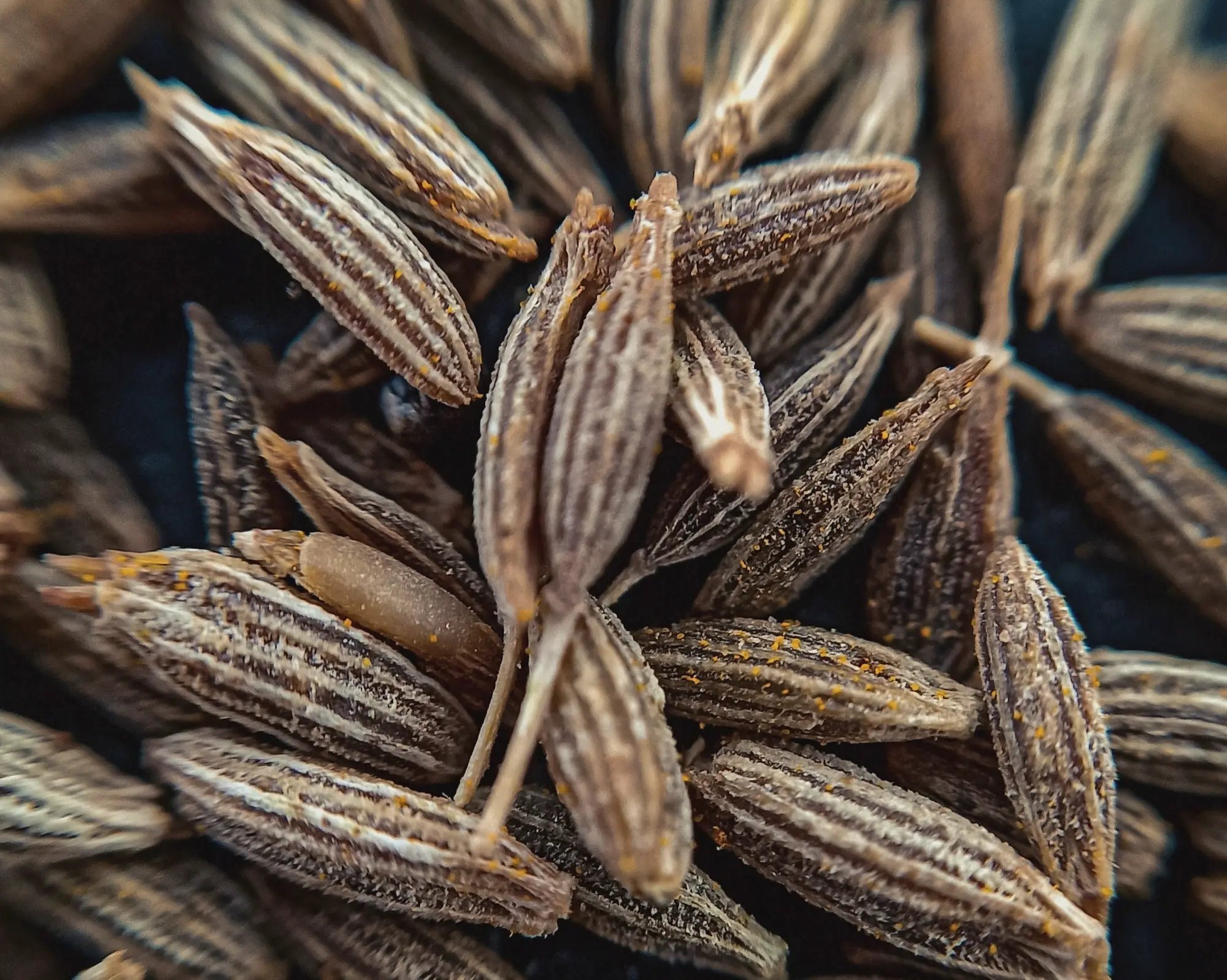
India grows about 70% of the world's cumin, and Indian cumin usually sells at a premium to Turkish and Iranian origin. Buyers keep paying it. If you are weighing origins for a blend or a retail pack, it helps to know what the premium buys, and what it does not.
Most of the answer is one number: volatile oil.
What volatile oil is
Volatile oil is the aromatic oil in the seed. In cumin, it carries the warm, slightly bitter smell people recognise straight away, and it is what survives into your finished product after grinding, blending and storage. It is measured as a percentage of the seed by weight, and cumin is graded on it.
More oil means more flavour per kilo, which matters in two ways. A retail pack with higher oil smells and tastes stronger when the customer opens it. And a food manufacturer can often hit the same flavour target with less cumin.
How the origins compare
| Origin | Typical volatile oil (trade range) |
|---|---|
| India | About 2.5 to 4.5% |
| Turkey | About 1.5 to 2.5% |
| Iran | About 1.5 to 2.5% |
The top of the Turkish and Iranian range sits at the bottom of the Indian one. On a like-for-like flavour basis, the gap in price per kilo often narrows or disappears once you account for how much cumin goes into the product.
These are typical ranges, not promises. Two Indian lots can sit at opposite ends of the range. The only figure that counts is the one on the certificate of analysis for your lot, so ask for it, and check it comes from that lot rather than a generic spec sheet.
What the premium does not buy you
Volatile oil tells you about flavour. It tells you nothing about whether the lot will clear your border, and for cumin the test that most often gets lots rejected is ethylene oxide residue.
Some suppliers fumigate cumin with ethylene oxide to knock down microbial counts before a deadline. The EU limit for spices is 0.1 mg/kg, counted as the sum of ethylene oxide and 2-chloroethanol, and Japan applies 0.01 mg/kg. The EU started checking Indian sesame seed for it in 2020, and seed spices, cumin included, have been watched closely since. We explain how each border handles it in why Indian spice shipments get rejected.
Cumin also needs a clean Salmonella result. Seeds dried in the open can pick it up, and the usual standard is none detected in a 25 g sample.
So the questions to ask a cumin supplier are:
- What is the volatile oil figure on the CoA for this lot?
- Was this lot tested for ethylene oxide, at what lab, and against which limit?
- What is the Salmonella result?
- Where was the cumin grown, and who cleaned and packed it?
Vague answers to any of these are a reason to keep looking.
What the border checks for cumin
| Destination | Main check for cumin |
|---|---|
| EU (Germany, Netherlands, Italy) | Ethylene oxide; listed spices under Reg. (EU) 2019/1793 |
| United Kingdom | Pesticide residues; cumin is on the UK list for elevated checks |
| USA | Salmonella |
| Japan | Full residue panel; 0.01 mg/kg for ethylene oxide |
| UAE and Saudi Arabia | GSO 193:2021 and GSO 382:2021 pesticide residue limits |
China, Bangladesh, the UAE and the USA are among the biggest buyers of Indian cumin. For buyers in the Gulf, every shipment carries GSO conformity documents alongside the CoA. You can read the details on our UAE market page and Saudi Arabia page.
How we supply cumin
We confirm the sourcing region for cumin with each quote, so it matches the lot you are offered. It is grown for us on contract and processed in our own units, with no trader in between.
Every lot is tested before packing at a third-party lab accredited by NABL to ISO/IEC 17025, against the limit in your country's standard, and that limit is written into the contract. Cumin ships with:
- An ethylene oxide test certificate
- A Salmonella test certificate
- The certificate of analysis for the lot, with its volatile oil figure
- The phytosanitary certificate, certificate of origin, FSSAI licence and IEC
The minimum order is 0.5 MT, enough to run a trial in your own blend before moving to a full container. Private label starts at 1 MT. Containers are loaded about 15 days after you order. The full spec is on our cumin seeds exporter page, and if this is your first order from India, start with our import checklist.
Cumin FAQs
Why is Indian cumin more expensive than Turkish cumin?
Mostly because of volatile oil. Indian cumin typically runs 2.5 to 4.5%, against about 1.5 to 2.5% for Turkish and Iranian origin, so it carries more flavour per kilo.
What is a good volatile oil figure for cumin?
For Indian cumin, anything within 2.5 to 4.5% is typical. Ask for the figure on the CoA for your lot.
What is the main reason cumin lots are rejected?
Ethylene oxide residue. The EU limit is 0.1 mg/kg, and Japan applies 0.01 mg/kg.
What is the minimum order for cumin from India?
With us, 0.5 MT, or 1 MT for private label.
Compare it yourself
The quickest way to see the difference is to run a sample side by side with your current cumin. Ask us for a sample with the CoA for its lot. You pay the courier, and most buyers have an answer in about 5 days. If you already have a written quote from another supplier, send it with your enquiry: we will come back at least US$100 per MT lower for the same spec and terms, or tell you why we cannot. Start with a quote request, or learn more about Prime Harvest Global.